
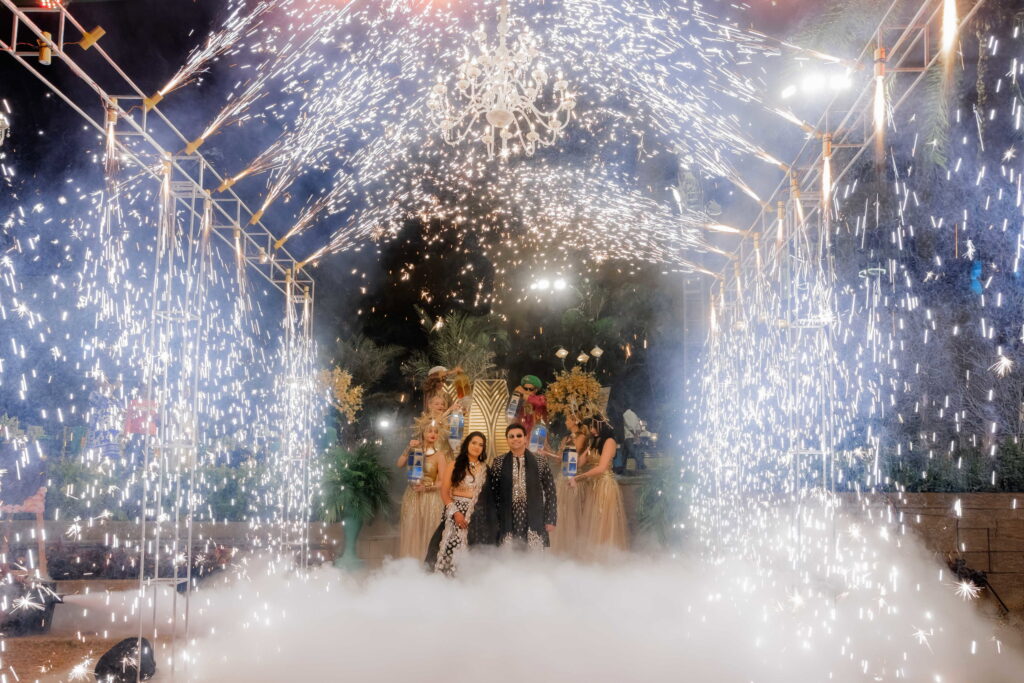
Most couples see their wedding planner at the mandap, at the entrance, maybe running across the lawn with a walkie-talkie. What they don’t see is everything else – the six hours before the first guest arrived, the phone calls that were made before anyone woke up, and the quiet fires that were put out before they ever had a chance to become your problem.
This is what a wedding day actually looks like from where we stand at Shubhtithi Weddings.
It Starts Before You're Awake
By the time the first family member steps out for morning rituals, our team is already on the ground. The first thing that happens when we arrive at the property is a team check-in – every member of the Shubhtithi ground team is accounted for, stationed, and clear on their role. Not because we didn’t plan – we did, extensively, days before – but because a wedding day moves fast and everyone needs to be in position before it starts moving.
Each team member arrives briefed. There is no ‘so what do I do today?’ conversations on a wedding morning. Responsibilities are divided and owned – décor checks, vendor coordination, family liaison, guest management, logistics. Everyone starts working the moment they arrive.
The Show Flow: A Minute-by-Minute Map of Your Day
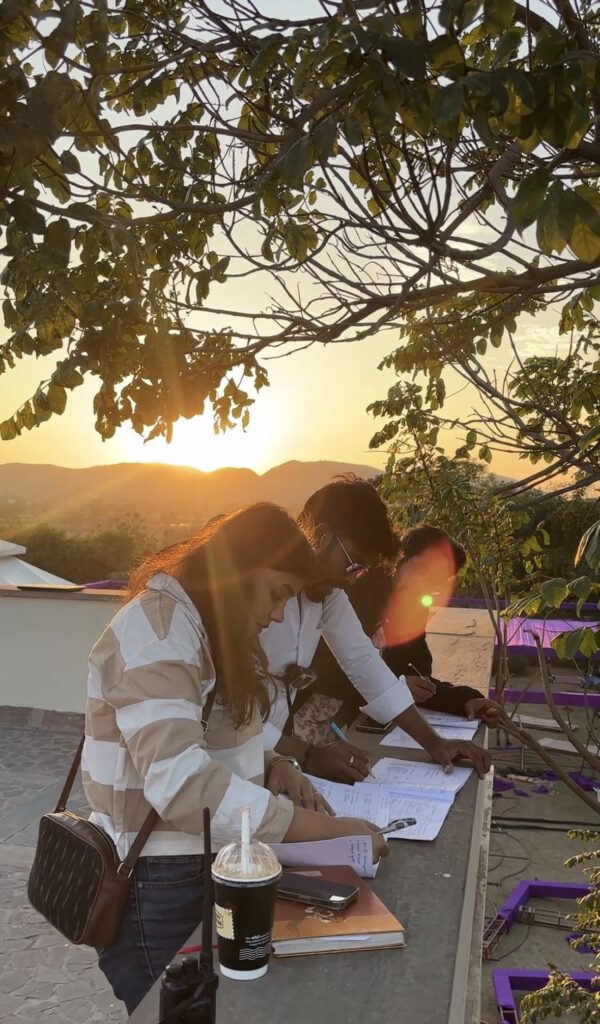
At the centre of every wedding day we run is something we call the show flow – a minute-by-minute document that maps every single event, arrival, and detail of the day. Not hour by hour. Minute by minute.
The show flow tells us what time a vendor is arriving, what time welcome drinks begin, what time starters are to be served, what time the dhol needs to be ready, and what time the baraat is expected at the gate. Every function, every cue, every handoff – written down, shared with the team, and followed.
We also check in with the family first thing – what time are they getting ready, are they on track, is there anything that’s shifted since last night? That early check-in shapes the entire day.
While You're in the Moment, We're Already on the Next One
Here’s something most people don’t realise: while you’re dancing at the sangeet, we’re not watching. We’re in the next venue space, checking that the décor is set, the lighting is right, the catering team is ready, the entertainment is briefed. By the time the event wraps and guests move to the next function, everything is already in place. That seamless transition didn’t happen by itself.
The wedding day is essentially one long relay race across multiple events – and our job is to make sure the baton never drops. Coordination is ongoing and simultaneous: with the hotel operations team, with decorators, with the sound and lighting crew, with the catering team, with photographers, with the family. All of it, all at once, all day.
When Things Don't Go to Plan - And They Won't
In an Indian wedding, something will always shift. An event runs long, a family ritual takes more time than expected, a vendor is delayed. This is not a failure of planning – it’s the nature of a multi-day, multi-function celebration with hundreds of people and dozens of moving parts.
What matters is how you recover. When an event runs over, we don’t let the next one suffer for it. We speak with the family, understand what’s happening, and recalibrate – trimming where we can, accelerating where we must, always protecting the integrity of what comes next. If a couple has spent significantly on every function, every function deserves to be fully experienced. That’s the commitment.
And then there are the moments that require something more.
At one wedding we planned, the ghodi – the ceremonial horse for the baraat – met with an accident on the way to the venue. We immediately arranged a backup. The backup arrived. And then, just before the baraat was to begin, the original ghodi arrived too. The groom had two horses waiting for him and didn’t know why. He didn’t need to know why. He just had options, and his baraat started on time.
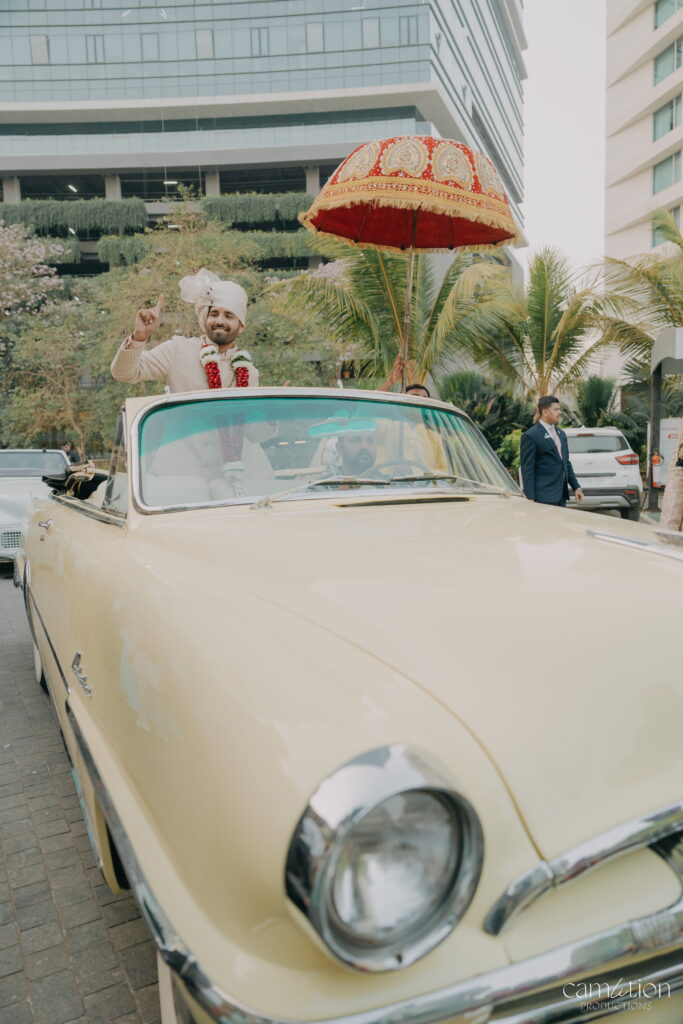
At another wedding, the vintage car arranged for the groom’s entry got stuck in traffic and it became clear it wasn’t going to make it. We sourced another vintage car in time. When the original car also eventually arrived, the groom got to choose which one he wanted to arrive in. What could have been a stressful situation became a moment of delight. That’s the goal – not just to prevent disasters, but to turn them into something better.
And sometimes, the challenge is bigger than a delayed vendor. At a destination wedding we planned at Jumeirah Gulf of Bahrain, we had designed an elaborate sangeet on the beach – months of planning, extensive décor, a setup that was meant to make the most of one of the most beautiful coastal venues in the region. That evening, Bahrain was hit by a severe sandstorm. Going ahead on the beach was simply not an option – not with the safety and wellbeing of the family and guests at stake.
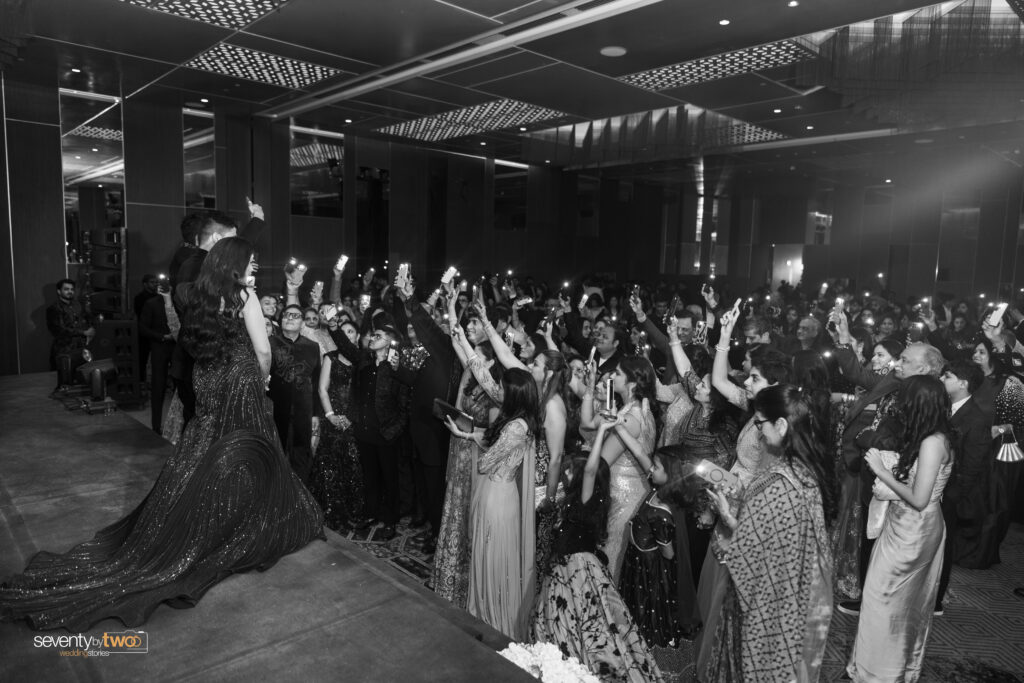
The entire event had to move indoors. The décor, the food setup, the sound and lighting – everything that had been built for an open beach had to be dismantled, shifted, and reassembled inside the banquet in time for the evening to begin. Working closely with the decorators and the hotel team, that’s exactly what happened. The sangeet ran on time. The guests had no idea what the hours before had looked like. That night, the beach stayed empty and the dance floor was full – which was always the point.
How the Day Ends
Most weddings wrap up around midnight. But the day doesn’t end when the last guest leaves.
Once the event closes, the team debriefs – what worked, what needed adjustment, what needs to be different tomorrow. Walkies go on charge. Guest communications for the next day are sent out. A run-through with the core team maps out the plan of action for the morning.
And then we’re back on ground at 6 AM to do it all again.
So, Do You Actually Need a Wedding Planner?
Only if you want your wedding day to feel effortless.
The show flow, the team, the vendor coordination, the backup horses, the contingency vintage cars – none of this is visible to you on the day. And that’s exactly the point. You should be present, celebrating, in the moment. The infrastructure that makes that possible is what a good wedding planner provides.
Without one, someone in your family is doing this. Usually the person who was supposed to be dancing.
Planning a Wedding? Let's Talk.
At Shubhtithi Weddings, this is what we do – every function, every detail, every contingency. If you’re in the early stages of planning and want to understand what working with a planner actually looks like, we’d love to have that conversation.
Reach out to us- no pitch, no pressure, just a real conversation from people who live and breathe this.